
Akasaka Palace, the State Guest House

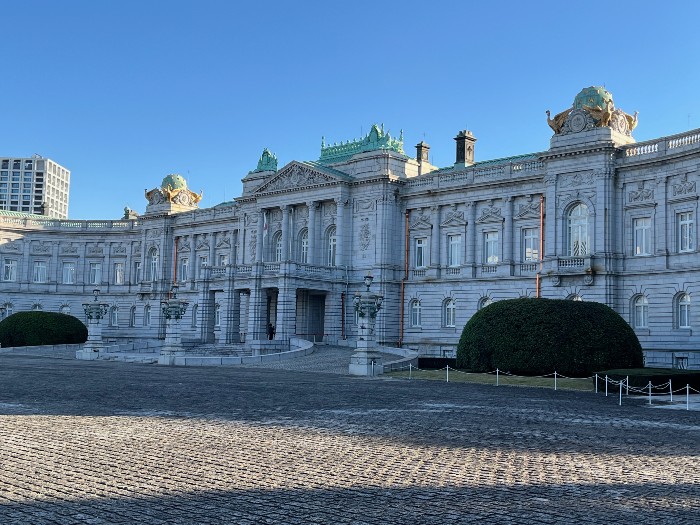
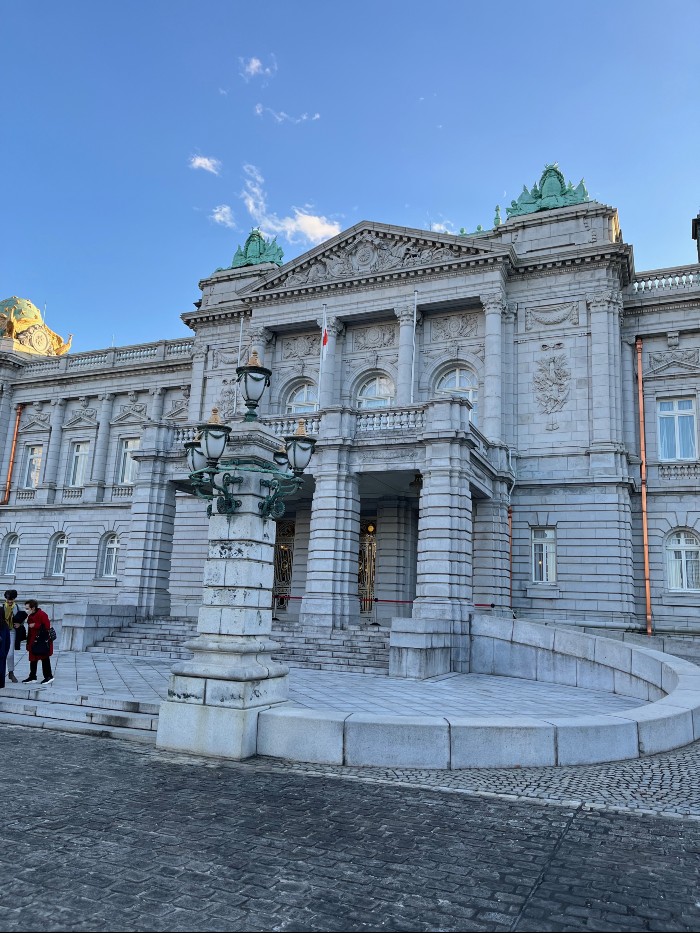
The Akasaka Palace, the State Guest House, is a Meiji era Neo-Baroque building designed by Katayama Tōkuma, who studied under Josiah Conder at the Imperial College of Engineering.
The palace took roughly ten years to build, and was completed in 1909. It was appropriately named Tōgū Imperial Palace because it was built for the Crown Prince Yoshihito, who later became Emperor Taisho in 1912.
From 1923 until his coronation in 1928, Regent Crown Prince Hirohito resided at Akasaka Palace. More recently, Crown Prince Naruhito resided in the palace before his ascension to the Chrysanthemum throne in the spring of 2019.
The building survived the Great Kanto Earthquake as well as World War II. The Japanese Government took control of the palace after the war, and it was used for various government purposes, most notably as the National Diet Library in 1948. After all the books in the Imperial Library in Ueno were moved to the National Diet Library in 1949, it became the largest national library in Japan. The National Diet Library moved to a dedicated larger facility in Nagatachō in 1961.
Over the succeeding years Akasaka Palace was renovated and, upon completion in 1967, was officially introduced as the new state guest house. The first official state visitor at the newly renovated palace was Gerald Ford in 1974. In that same year a Japanese-style annex called Yushintei was built on the palace grounds to satisfy visitors who wanted more of a Japanese lodging experience.
In 2009, the palace was designated as a National Treasure of Japan. It continues to serve as accommodations for visiting heads of state, and the venue for international conferences and summits.
Akasaka Palace was the largest building in Japan during the Meiji period. While it adopted authentic Western architectural styles, it also uses themes unique to Japan for its sculptures and other decorations, and makes full use of sophisticated craft techniques, making it highly valuable in terms of design.
In the Meiji period, a new architectural world began with the adoption of Western architectural designs and techniques. This building represents the pinnacle of architecture designed by Japanese architects, both in terms of design as well as the adoption of cutting-edge technology at the time. It is particularly significant in cultural history as one of the most representative examples of Western style architecture in Japan before the Showa period.
So, my visit was in December of 2024. It was a short walk from Shinanomachi Station to the grand entrance gate and large open plaza in front of the palace. There I found tables and chairs set up for tourists, and even a food truck. I took a few pictures from this vantage point to capture the majesty of the palace.
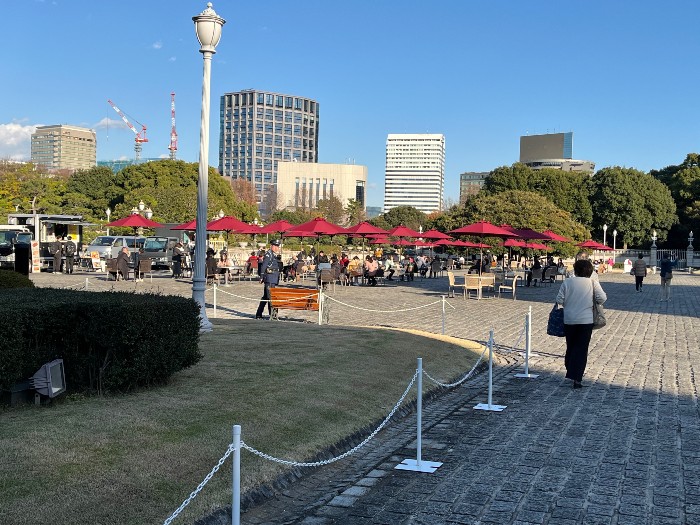
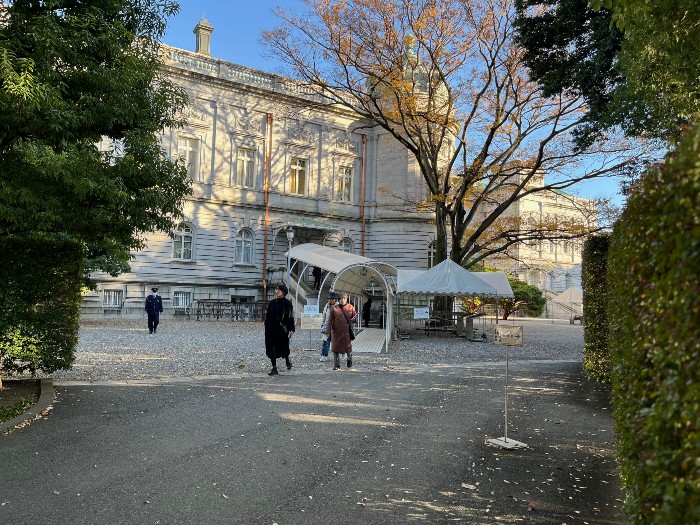
I had no trouble getting a ticket to enter. There were only a couple of people ahead of me in line. Security was tight getting in, with guards and "watchers" everywhere. I felt like someone was keeping an eye on me the whole time I was there.
As I entered, I was reminded by the staff that picture taking is not allowed. That was disappointing, but I felt better about it when I was presented with a fairly thick English language brochure filled with pictures and explanations about every room in the palace.
As you follow the red carpet to each individual room you will be awestruck as I was. One room reminded me of some of the palaces in Europe I had visited, with large, colorful murals on the ceiling. Pictures of some of the state guests, such as President Biden, were on display.
There are four prominent rooms that all have individual names. Most if not all of those rooms have a docent present to answer questions. My favorite room was Kacho no Ma. There, I noticed some very intricate glass paintings on the walls, which I thought were exquisite. I asked the docent about them, and he told me the story of the technique used to create these cloisonné panels, and that it was a lost art. I recommend you approach one of the docents if you have any questions. My docent was very friendly - we talked for around 15 minutes about the panels, the room and the palace in general.
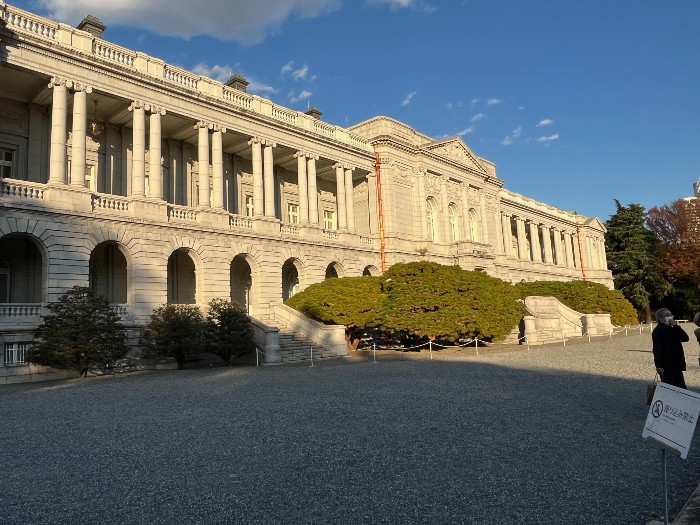
On the back side of the palace there is a garden area and fountain. Don't miss them! The view of the palace from there will prompt you to take a bunch of pictures.
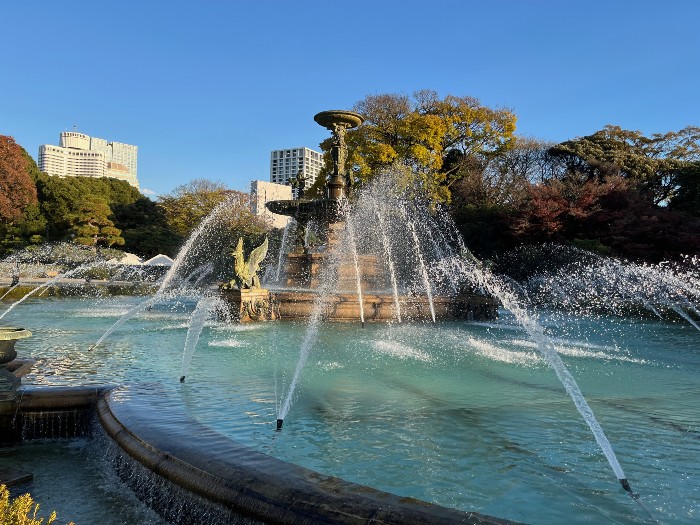
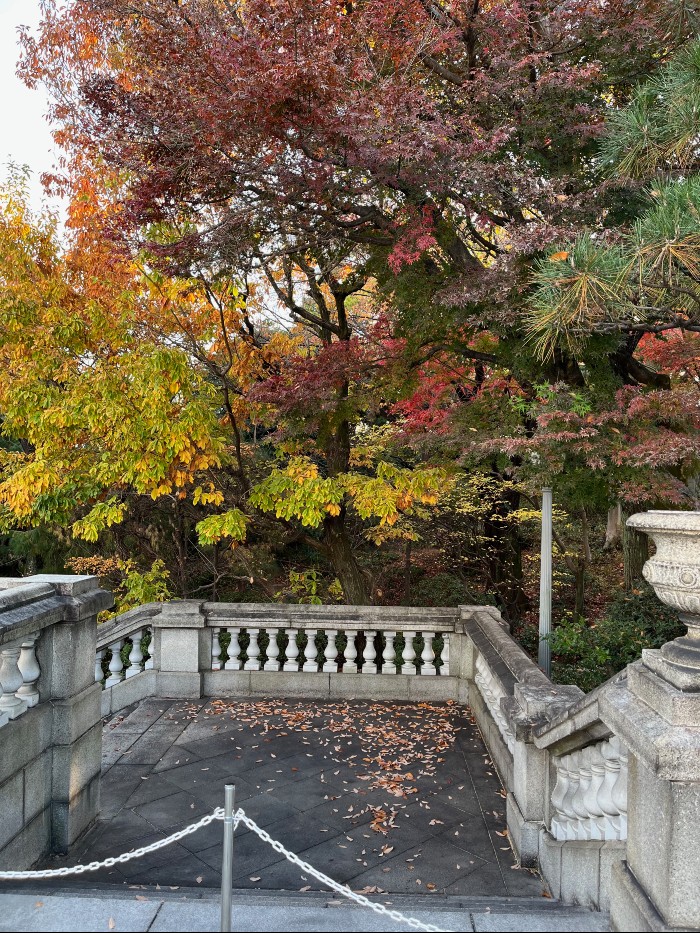
I had been going to Japan since 1984 and was not aware of this palace complex, and to be fair to myself, it did not open to the public all year until 2008, so it only took me a little over a decade to discover it.
Clearly this is not a place you might think of spending a half day visiting upon your first visit to Tokyo. But if you have time, I would highly recommend putting the Akasaka Palace on your list. I'm sure you'll be as impressed as I was.
Comments
Be the first to comment.